
Logistics
Bosnia Currency Explained: The Convertible Mark
By Atlas Admin · June 30, 2026
Bosnia Currency Explained: The Convertible Mark
Everything you need to know about paying your way around Bosnia and Herzegovina in 2026, from what the KM actually is to a free converter that never goes out of date.
Bosnia and Herzegovina's 2026 World Cup run put the country in front of more travelers than ever, and most of them arrive with the same question: what do I actually pay with here? The answer is the Convertible Mark, written KM or BAM, and it is the only official currency anywhere in the country. Euros get accepted in a few tourist spots, but the exchange rate you're quietly given for that convenience is rarely in your favor. This guide covers what the Mark is, why its value never moves, and exactly how to handle cash, cards and ATMs so you don't leave money on the table.
Quick facts: the Convertible Mark
- Official name
- Convertible Mark (Konvertibilna Marka)
- Symbol / abbreviation
- KM (used locally) or BAM (ISO 4217 code)
- Subunit
- 1 Mark = 100 Fening
- Used in
- Bosnia and Herzegovina only
- Pegged to
- Euro, fixed at 1 EUR = 1.95583 KM
- Common rounding
- Often quoted as roughly 1 EUR ≈ 1.96 KM
- Introduced
- 22 June 1998, under the Dayton Agreement
- Banknotes in circulation
- 10, 20, 50, 100, 200 KM
- Coins in circulation
- 5, 10, 20, 50 fening; 1, 2, 5 KM
- Issued by
- Central Bank of Bosnia and Herzegovina
What is the Convertible Mark (KM/BAM)?
The Convertible Mark is Bosnia and Herzegovina's sole legal tender. You'll see it written as KM on price tags and receipts around the country, and as BAM on international exchange rate boards, currency converters, and your bank statement. Both refer to exactly the same currency; KM is simply the everyday local abbreviation, while BAM is the formal ISO 4217 code the finance world uses.
The name "convertible" is not decorative. It refers to a currency board arrangement: the Central Bank of Bosnia and Herzegovina cannot print Marks freely, it can only issue new KM against foreign reserves it actually holds, mostly euros. That structure is what keeps the currency stable and is the reason the peg below has held for over two decades without a single devaluation.
The euro peg, and why it never moves
The Convertible Mark is fixed to the euro at exactly 1 EUR = 1.95583 KM. Not "around," not "roughly," exactly. This is not a market rate that drifts with supply and demand the way the British pound or the US dollar does; it is a legal peg set by the currency board, and it has not changed since the euro itself launched.
The reason the number looks so oddly specific traces back to Germany. When the Mark was created in 1998, it was pegged 1:1 to the Deutsche Mark. In 2002, Germany retired the Deutsche Mark in favor of the euro at a fixed conversion rate of 1 EUR = 1.95583 DM, and Bosnia's currency board simply carried that exact number over. So the "odd" figure is really just the Deutsche Mark's own euro conversion rate, inherited unchanged.
Diagram: BosniaAtlas. Rate confirmed against the Central Bank of Bosnia and Herzegovina's own account of the peg.
Banknotes and coins: what you'll actually be handed
Bosnian Marks currently circulate as five banknotes and seven coin values.
Stylised reference only, not a reproduction of the actual note artwork or security features.
Bosnian dinar: an outdated currency, not the current one
If you've come across references to a "Bosnian dinar," you're looking at history, not today's currency. The Bosnia and Herzegovina dinar circulated briefly during and just after the 1992 to 1995 war, before being replaced entirely by the Convertible Mark in 1998. It has no value and no use today; anyone offering to exchange "Bosnian dinars" with you is not dealing in real currency.
Euros or Marks: which should you actually pay with?
Some hotels, tour operators and souvenir shops near major sights will happily take your euros. That doesn't mean it's the better deal. Places that accept euros almost always apply their own informal conversion rate, and it typically rounds in their favor, not the official 1.95583. Any change you're handed back also usually comes in Marks anyway, calculated at whatever rate they chose to use.
The practical rule: pay in KM whenever you can. It removes the guesswork entirely, since the price on the till and the price on your bank statement line up with the same fixed number.
| Situation | Best choice | Why |
|---|---|---|
| Restaurants, cafés, taxis | KM | Prices are set in KM; euro conversion is informal and usually unfavorable |
| Markets and small vendors | KM cash | Cards often aren't accepted, and change is given in KM regardless |
| Hotels and larger tour operators | KM if possible, card otherwise | Euros are accepted but at a worse effective rate than the peg |
| Card payments in cities | Card, billed in KM | Always choose "pay in local currency" to use the real bank rate, not DCC |
Cards, ATMs, and the trap called dynamic currency conversion
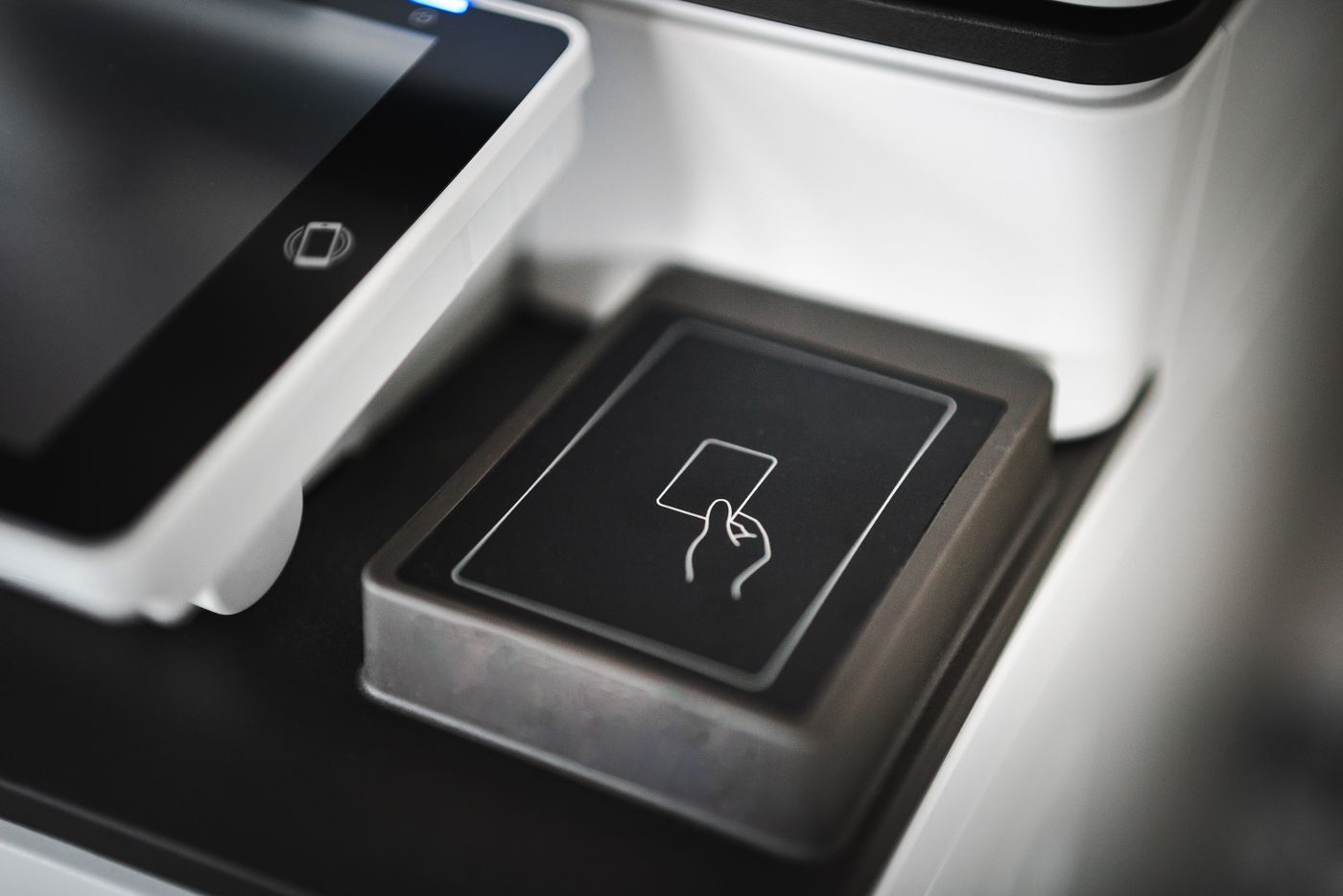
Cards are widely accepted across Bosnian cities, Visa and Mastercard especially, and ATMs are easy to find in Sarajevo, Mostar, and most towns tourists pass through. A few habits make a real difference to what you actually pay.
- Prefer bank-branded ATMs over generic standalone machines in tourist areas, which tend to carry higher withdrawal fees.
- Always choose to be charged in KM, never in your home currency, when a machine or card terminal asks. See the calculator below for exactly what the alternative costs you.
- Withdraw larger amounts less often rather than making several small withdrawals, since many ATMs charge a flat fee per transaction regardless of amount.
- Carry a backup card stored separately from your primary one, standard travel practice anywhere, Bosnia included.
- Notify your bank before travel if it has a habit of flagging Balkan transactions as unusual activity.
Tool: KM ⇄ EUR converter and DCC cost calculator
Because the peg is fixed at 1 EUR = 1.95583 KM, this converter is always accurate, unlike a live-rate widget, there's no feed to go stale.
Fixed rate used: 1 EUR = 1.95583 KM. For US dollars, pounds or any other non-euro currency, look up today's EUR rate for your currency, then apply the fixed KM rate on top, since only the euro leg of this is fixed by law.
Where to exchange cash in Bosnia
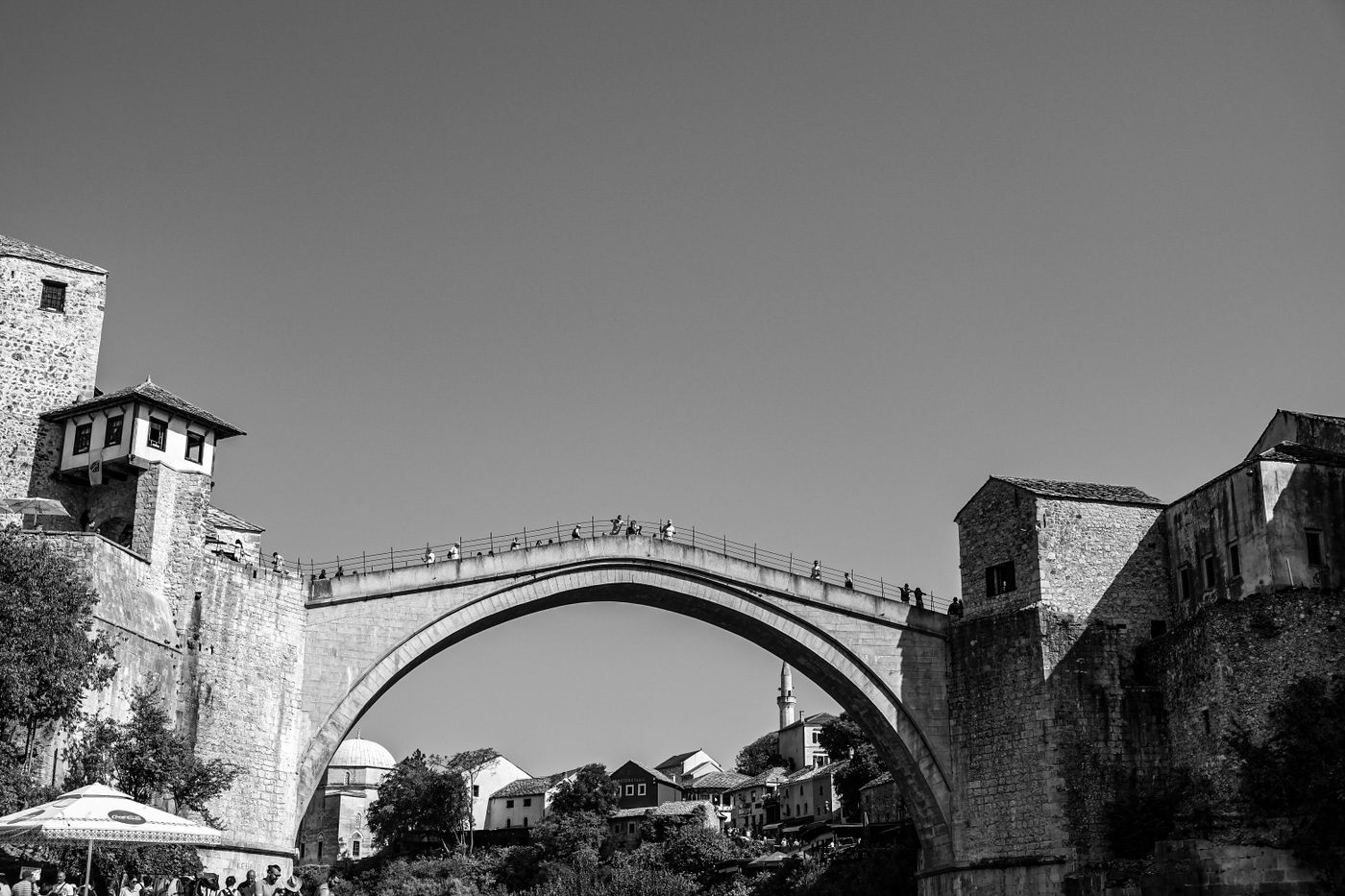
You rarely need to exchange cash before arriving. ATMs give you Marks directly at a fair rate, and most travelers never need a physical exchange counter at all. If you do want to convert cash, licensed exchange offices, called mjenjačnica, are common in Sarajevo's Baščaršija old town and around Mostar's old bridge in the Herzegovina region. Compare two or three rates before committing, since they can vary meaningfully between neighboring booths, and avoid exchanging at airports, where convenience comes at a noticeably worse rate.
How much cash to bring
Cards cover most planned expenses, but a cash buffer for markets, small cafés, tips and rural stops makes daily life much smoother.
| Trip length | Suggested cash buffer | Approx. in EUR |
|---|---|---|
| Weekend (2 to 3 days) | 100 to 150 KM | ~51 to 77 EUR |
| One week | 250 to 400 KM | ~128 to 205 EUR |
| Two weeks | 450 to 700 KM | ~230 to 358 EUR |
Treat this as a top-up buffer alongside cards, not your entire trip budget; withdraw more from an ATM as needed rather than carrying it all from day one.
Common mistakes to avoid
- Assuming euro acceptance means a euro-fair price. Acceptance and a good rate are two different things.
- Accepting "pay in your home currency" at a terminal or ATM. That's dynamic currency conversion, and it costs you every time.
- Arriving with only large notes. Small vendors and taxis frequently can't break a 100 or 200 KM note.
- Exchanging at the airport out of convenience. The rate is reliably worse than in the city.
- Carrying only one card. A blocked or lost card shouldn't end your access to money mid-trip.
- Confusing the Bosnian dinar with the Convertible Mark. The dinar hasn't been used since the 1990s.
- Assuming Croatian kuna or Serbian dinars work here. Neither does; KM is the only accepted currency at Bosnian businesses.
Will Bosnia ever adopt the euro?
Not imminently, but it's a live question worth understanding. Bosnia and Herzegovina became an official candidate for European Union membership in 2022, and eurozone entry is a step that would typically follow full EU membership, itself still years away at minimum. Here's the useful part: because the Mark is already pegged to the euro at a fixed, legally set rate, there would be no surprise conversion math if that day comes. The same way Croatia's kuna converted to euros in 2023 at its own long-fixed rate, Bosnia's KM would very likely convert at exactly 1.95583 to the euro, the number already sitting on every price tag today.
Frequently asked questions
What currency does Bosnia and Herzegovina use?
The Convertible Mark, written KM or BAM. It is the only official currency in the country, used identically in Sarajevo, Mostar, and everywhere else.
Is the Bosnian Mark pegged to the euro?
Yes, at a fixed rate of 1 EUR = 1.95583 KM, unchanged since the peg was set. It is a currency board arrangement, not a market-driven exchange rate.
Can I pay with euros in Bosnia?
Some hotels and tourist-facing businesses will take euros, but the informal rate they apply is usually worse than the official peg, and change is typically given in Marks. Paying in KM directly gets you better value.
What is 1 KM in euros?
1 KM is approximately 0.51 EUR, since 1 EUR equals 1.95583 KM. Use the converter above for any amount.
What is the Bosnian currency symbol?
KM is the everyday symbol used on price tags in Bosnia. BAM is the three-letter ISO code used internationally by banks and currency converters.
Is the Bosnian dinar still used?
No. The dinar was a war-era currency used from 1992 until it was replaced by the Convertible Mark in 1998. It has no value today.
What is Bosnien Währung / munteenheid Bosnie?
The German and Dutch phrasings for "Bosnia's currency" both refer to the same answer: the Convertible Mark (KM/BAM), pegged to the euro at 1 EUR = 1.95583 KM.
Should I use an ATM or exchange cash in Bosnia?
ATMs, especially bank-branded ones, generally give a fairer rate than airport exchange counters. Just decline any "pay in your home currency" prompt and select KM.
Do I need cash in Sarajevo and Mostar?
Yes, for markets, small cafés, taxis and rural stops, even though cards are widely accepted at hotels, restaurants and larger shops in both cities.